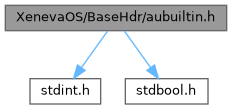
#include <stdint.h>
#include <stdbool.h>
Go to the source code of this file.
|
| void | AuBuiltinRegister (const char *name, int bus, int dev, int func, au_builtin_fn release, au_builtin_fn reinit) |
| |
| int | AuBuiltinUnload (const char *name) |
| |
| int | AuBuiltinLoad (const char *name) |
| |
| bool | AuBuiltinClaimsPci (int bus, int dev, int func) |
| |
| int | AuBuiltinList (void(*cb)(const char *name, bool bound, int bus, int dev, int func)) |
| |
◆ AU_BUILTIN_MAX
Registry of drivers that are linked into the kernel but can still be handed over: a built-in driver registers the PCI function it bound, plus how to let go of it (release) and how to take it back (reinit). That makes them behave like loadable drivers for /dev/drvctl ("unload NAME" / "load NAME") and lets /dev/hwdev refuse a PCI function a built-in driver still owns, which is what allows a user-space server to take such a device over safely and the supervisor to give it back.
◆ au_builtin_fn
| typedef void(* au_builtin_fn) (void) |
◆ AuBuiltinClaimsPci()
| bool AuBuiltinClaimsPci |
( |
int |
bus, |
|
|
int |
dev, |
|
|
int |
func |
|
) |
| |
|
extern |
◆ AuBuiltinList()
| int AuBuiltinList |
( |
void(*)(const char *name, bool bound, int bus, int dev, int func) |
cb | ) |
|
|
extern |
◆ AuBuiltinLoad()
| int AuBuiltinLoad |
( |
const char * |
name | ) |
|
|
extern |
◆ AuBuiltinRegister()
◆ AuBuiltinUnload()
| int AuBuiltinUnload |
( |
const char * |
name | ) |
|
|
extern |