#include <linux/bits.h>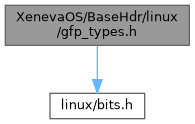
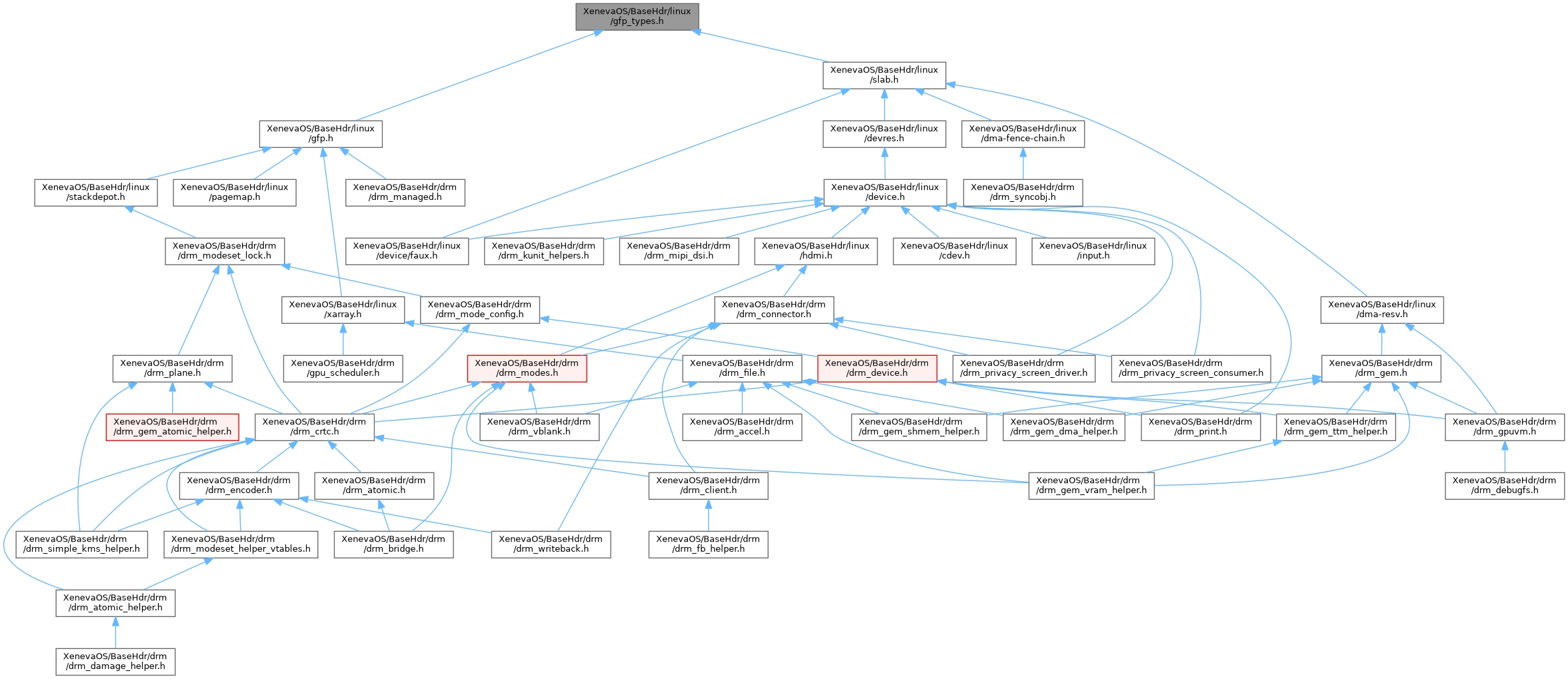
Go to the source code of this file.
Macro Definition Documentation
◆ ___GFP_ACCOUNT
| #define ___GFP_ACCOUNT BIT(___GFP_ACCOUNT_BIT) |
◆ ___GFP_COMP
| #define ___GFP_COMP BIT(___GFP_COMP_BIT) |
◆ ___GFP_DIRECT_RECLAIM
| #define ___GFP_DIRECT_RECLAIM BIT(___GFP_DIRECT_RECLAIM_BIT) |
◆ ___GFP_DMA
| #define ___GFP_DMA BIT(___GFP_DMA_BIT) |
◆ ___GFP_DMA32
| #define ___GFP_DMA32 BIT(___GFP_DMA32_BIT) |
◆ ___GFP_FS
| #define ___GFP_FS BIT(___GFP_FS_BIT) |
◆ ___GFP_HARDWALL
| #define ___GFP_HARDWALL BIT(___GFP_HARDWALL_BIT) |
◆ ___GFP_HIGH
| #define ___GFP_HIGH BIT(___GFP_HIGH_BIT) |
◆ ___GFP_HIGHMEM
| #define ___GFP_HIGHMEM BIT(___GFP_HIGHMEM_BIT) |
◆ ___GFP_IO
| #define ___GFP_IO BIT(___GFP_IO_BIT) |
◆ ___GFP_KSWAPD_RECLAIM
| #define ___GFP_KSWAPD_RECLAIM BIT(___GFP_KSWAPD_RECLAIM_BIT) |
◆ ___GFP_MEMALLOC
| #define ___GFP_MEMALLOC BIT(___GFP_MEMALLOC_BIT) |
◆ ___GFP_MOVABLE
| #define ___GFP_MOVABLE BIT(___GFP_MOVABLE_BIT) |
◆ ___GFP_NO_OBJ_EXT
| #define ___GFP_NO_OBJ_EXT BIT(___GFP_NO_OBJ_EXT_BIT) |
◆ ___GFP_NOFAIL
| #define ___GFP_NOFAIL BIT(___GFP_NOFAIL_BIT) |
◆ ___GFP_NOLOCKDEP
| #define ___GFP_NOLOCKDEP 0 |
◆ ___GFP_NOMEMALLOC
| #define ___GFP_NOMEMALLOC BIT(___GFP_NOMEMALLOC_BIT) |
◆ ___GFP_NORETRY
| #define ___GFP_NORETRY BIT(___GFP_NORETRY_BIT) |
◆ ___GFP_NOWARN
| #define ___GFP_NOWARN BIT(___GFP_NOWARN_BIT) |
◆ ___GFP_RECLAIMABLE
| #define ___GFP_RECLAIMABLE BIT(___GFP_RECLAIMABLE_BIT) |
◆ ___GFP_RETRY_MAYFAIL
| #define ___GFP_RETRY_MAYFAIL BIT(___GFP_RETRY_MAYFAIL_BIT) |
◆ ___GFP_SKIP_KASAN
| #define ___GFP_SKIP_KASAN 0 |
◆ ___GFP_SKIP_ZERO
| #define ___GFP_SKIP_ZERO 0 |
◆ ___GFP_THISNODE
| #define ___GFP_THISNODE BIT(___GFP_THISNODE_BIT) |
◆ ___GFP_WRITE
| #define ___GFP_WRITE BIT(___GFP_WRITE_BIT) |
◆ ___GFP_ZERO
| #define ___GFP_ZERO BIT(___GFP_ZERO_BIT) |
◆ ___GFP_ZEROTAGS
| #define ___GFP_ZEROTAGS BIT(___GFP_ZEROTAGS_BIT) |
◆ __GFP_ACCOUNT
| #define __GFP_ACCOUNT ((__force gfp_t)___GFP_ACCOUNT) |
◆ __GFP_BITS_MASK
| #define __GFP_BITS_MASK ((__force gfp_t)((1 << __GFP_BITS_SHIFT) - 1)) |
◆ __GFP_BITS_SHIFT
| #define __GFP_BITS_SHIFT ___GFP_LAST_BIT |
◆ __GFP_COMP
| #define __GFP_COMP ((__force gfp_t)___GFP_COMP) |
◆ __GFP_DIRECT_RECLAIM
| #define __GFP_DIRECT_RECLAIM ((__force gfp_t)___GFP_DIRECT_RECLAIM) /* Caller can reclaim */ |
◆ __GFP_DMA
| #define __GFP_DMA ((__force gfp_t)___GFP_DMA) |
◆ __GFP_DMA32
| #define __GFP_DMA32 ((__force gfp_t)___GFP_DMA32) |
◆ __GFP_FS
◆ __GFP_HARDWALL
| #define __GFP_HARDWALL ((__force gfp_t)___GFP_HARDWALL) |
◆ __GFP_HIGH
| #define __GFP_HIGH ((__force gfp_t)___GFP_HIGH) |
DOC: Watermark modifiers
Watermark modifiers – controls access to emergency reserves
__GFP_HIGH indicates that the caller is high-priority and that granting the request is necessary before the system can make forward progress. For example creating an IO context to clean pages and requests from atomic context.
__GFP_MEMALLOC allows access to all memory. This should only be used when the caller guarantees the allocation will allow more memory to be freed very shortly e.g. process exiting or swapping. Users either should be the MM or co-ordinating closely with the VM (e.g. swap over NFS). Users of this flag have to be extremely careful to not deplete the reserve completely and implement a throttling mechanism which controls the consumption of the reserve based on the amount of freed memory. Usage of a pre-allocated pool (e.g. mempool) should be always considered before using this flag.
__GFP_NOMEMALLOC is used to explicitly forbid access to emergency reserves. This takes precedence over the __GFP_MEMALLOC flag if both are set.
◆ __GFP_HIGHMEM
| #define __GFP_HIGHMEM ((__force gfp_t)___GFP_HIGHMEM) |
◆ __GFP_IO
DOC: Reclaim modifiers
Reclaim modifiers
Please note that all the following flags are only applicable to sleepable allocations (e.g. GFP_NOWAIT and GFP_ATOMIC will ignore them).
__GFP_IO can start physical IO.
__GFP_FS can call down to the low-level FS. Clearing the flag avoids the allocator recursing into the filesystem which might already be holding locks.
__GFP_DIRECT_RECLAIM indicates that the caller may enter direct reclaim. This flag can be cleared to avoid unnecessary delays when a fallback option is available.
__GFP_KSWAPD_RECLAIM indicates that the caller wants to wake kswapd when the low watermark is reached and have it reclaim pages until the high watermark is reached. A caller may wish to clear this flag when fallback options are available and the reclaim is likely to disrupt the system. The canonical example is THP allocation where a fallback is cheap but reclaim/compaction may cause indirect stalls.
__GFP_RECLAIM is shorthand to allow/forbid both direct and kswapd reclaim.
The default allocator behavior depends on the request size. We have a concept of so-called costly allocations (with order > PAGE_ALLOC_COSTLY_ORDER). !costly allocations are too essential to fail so they are implicitly non-failing by default (with some exceptions like OOM victims might fail so the caller still has to check for failures) while costly requests try to be not disruptive and back off even without invoking the OOM killer. The following three modifiers might be used to override some of these implicit rules. Please note that all of them must be used along with __GFP_DIRECT_RECLAIM flag.
__GFP_NORETRY: The VM implementation will try only very lightweight memory direct reclaim to get some memory under memory pressure (thus it can sleep). It will avoid disruptive actions like OOM killer. The caller must handle the failure which is quite likely to happen under heavy memory pressure. The flag is suitable when failure can easily be handled at small cost, such as reduced throughput.
__GFP_RETRY_MAYFAIL: The VM implementation will retry memory reclaim procedures that have previously failed if there is some indication that progress has been made elsewhere. It can wait for other tasks to attempt high-level approaches to freeing memory such as compaction (which removes fragmentation) and page-out. There is still a definite limit to the number of retries, but it is a larger limit than with __GFP_NORETRY. Allocations with this flag may fail, but only when there is genuinely little unused memory. While these allocations do not directly trigger the OOM killer, their failure indicates that the system is likely to need to use the OOM killer soon. The caller must handle failure, but can reasonably do so by failing a higher-level request, or completing it only in a much less efficient manner. If the allocation does fail, and the caller is in a position to free some non-essential memory, doing so could benefit the system as a whole.
__GFP_NOFAIL: The VM implementation must retry infinitely: the caller cannot handle allocation failures. The allocation could block indefinitely but will never return with failure. Testing for failure is pointless. It must be blockable and used together with __GFP_DIRECT_RECLAIM. It should never be used in non-sleepable contexts. New users should be evaluated carefully (and the flag should be used only when there is no reasonable failure policy) but it is definitely preferable to use the flag rather than open-code endless loop around allocator. Allocating pages from the buddy with __GFP_NOFAIL and order > 1 is not supported. Please consider using kvmalloc() instead.
◆ __GFP_KSWAPD_RECLAIM
| #define __GFP_KSWAPD_RECLAIM ((__force gfp_t)___GFP_KSWAPD_RECLAIM) /* kswapd can wake */ |
◆ __GFP_MEMALLOC
| #define __GFP_MEMALLOC ((__force gfp_t)___GFP_MEMALLOC) |
◆ __GFP_MOVABLE
| #define __GFP_MOVABLE ((__force gfp_t)___GFP_MOVABLE) /* ZONE_MOVABLE allowed */ |
◆ __GFP_NO_OBJ_EXT
| #define __GFP_NO_OBJ_EXT ((__force gfp_t)___GFP_NO_OBJ_EXT) |
◆ __GFP_NOFAIL
| #define __GFP_NOFAIL ((__force gfp_t)___GFP_NOFAIL) |
◆ __GFP_NOLOCKDEP
| #define __GFP_NOLOCKDEP ((__force gfp_t)___GFP_NOLOCKDEP) |
◆ __GFP_NOMEMALLOC
| #define __GFP_NOMEMALLOC ((__force gfp_t)___GFP_NOMEMALLOC) |
◆ __GFP_NORETRY
| #define __GFP_NORETRY ((__force gfp_t)___GFP_NORETRY) |
◆ __GFP_NOWARN
| #define __GFP_NOWARN ((__force gfp_t)___GFP_NOWARN) |
DOC: Action modifiers
Action modifiers
__GFP_NOWARN suppresses allocation failure reports.
__GFP_COMP address compound page metadata.
__GFP_ZERO returns a zeroed page on success.
__GFP_ZEROTAGS zeroes memory tags at allocation time. Setting memory tags at the same time as zeroing memory (e.g., with __GFP_ZERO) has minimal additional performance impact. However, __GFP_ZEROTAGS also zeroes the tags even if memory is not getting zeroed at allocation time (e.g., with init_on_free).
__GFP_SKIP_KASAN makes KASAN skip unpoisoning on page allocation. Used for userspace and vmalloc pages; the latter are unpoisoned by kasan_unpoison_vmalloc instead. If passed to vmalloc, kasan_unpoison_vmalloc is skipped too. For userspace pages, results in poisoning being skipped as well, see should_skip_kasan_poison for details. Only effective in HW_TAGS mode.
◆ __GFP_RECLAIM
| #define __GFP_RECLAIM ((__force gfp_t)(___GFP_DIRECT_RECLAIM|___GFP_KSWAPD_RECLAIM)) |
◆ __GFP_RECLAIMABLE
| #define __GFP_RECLAIMABLE ((__force gfp_t)___GFP_RECLAIMABLE) |
DOC: Page mobility and placement hints
Page mobility and placement hints
These flags provide hints about how mobile the page is. Pages with similar mobility are placed within the same pageblocks to minimise problems due to external fragmentation.
__GFP_MOVABLE (also a zone modifier) indicates that the page can be moved by page migration during memory compaction or can be reclaimed.
__GFP_RECLAIMABLE is used for slab allocations that specify SLAB_RECLAIM_ACCOUNT and whose pages can be freed via shrinkers.
__GFP_WRITE indicates the caller intends to dirty the page. Where possible, these pages will be spread between local zones to avoid all the dirty pages being in one zone (fair zone allocation policy).
__GFP_HARDWALL enforces the cpuset memory allocation policy.
__GFP_THISNODE forces the allocation to be satisfied from the requested node with no fallbacks or placement policy enforcements.
__GFP_ACCOUNT causes the allocation to be accounted to kmemcg.
__GFP_NO_OBJ_EXT causes slab allocation to have no object extension. mark_obj_codetag_empty() should be called upon freeing for objects allocated with this flag to indicate that their NULL tags are expected and normal.
◆ __GFP_RETRY_MAYFAIL
| #define __GFP_RETRY_MAYFAIL ((__force gfp_t)___GFP_RETRY_MAYFAIL) |
◆ __GFP_SKIP_KASAN
| #define __GFP_SKIP_KASAN ((__force gfp_t)___GFP_SKIP_KASAN) |
◆ __GFP_SKIP_ZERO
| #define __GFP_SKIP_ZERO ((__force gfp_t)___GFP_SKIP_ZERO) |
◆ __GFP_THISNODE
| #define __GFP_THISNODE ((__force gfp_t)___GFP_THISNODE) |
◆ __GFP_WRITE
| #define __GFP_WRITE ((__force gfp_t)___GFP_WRITE) |
◆ __GFP_ZERO
| #define __GFP_ZERO ((__force gfp_t)___GFP_ZERO) |
◆ __GFP_ZEROTAGS
| #define __GFP_ZEROTAGS ((__force gfp_t)___GFP_ZEROTAGS) |
◆ GFP_ATOMIC
| #define GFP_ATOMIC (__GFP_HIGH|__GFP_KSWAPD_RECLAIM) |
DOC: Useful GFP flag combinations
Useful GFP flag combinations
Useful GFP flag combinations that are commonly used. It is recommended that subsystems start with one of these combinations and then set/clear __GFP_FOO flags as necessary.
GFP_ATOMIC users can not sleep and need the allocation to succeed. A lower watermark is applied to allow access to "atomic reserves". The current implementation doesn't support NMI, nor contexts that disable preemption under PREEMPT_RT. This includes raw_spin_lock() and plain preempt_disable() - see "Memory allocation" in Documentation/core-api/real-time/differences.rst for more info.
GFP_KERNEL is typical for kernel-internal allocations. The caller requires ZONE_NORMAL or a lower zone for direct access but can direct reclaim.
GFP_KERNEL_ACCOUNT is the same as GFP_KERNEL, except the allocation is accounted to kmemcg.
GFP_NOWAIT is for kernel allocations that should not stall for direct reclaim, start physical IO or use any filesystem callback. It is very likely to fail to allocate memory, even for very small allocations. The same restrictions on calling contexts apply as for GFP_ATOMIC.
GFP_NOIO will use direct reclaim to discard clean pages or slab pages that do not require the starting of any physical IO. Please try to avoid using this flag directly and instead use memalloc_noio_{save,restore} to mark the whole scope which cannot perform any IO with a short explanation why. All allocation requests will inherit GFP_NOIO implicitly.
GFP_NOFS will use direct reclaim but will not use any filesystem interfaces. Please try to avoid using this flag directly and instead use memalloc_nofs_{save,restore} to mark the whole scope which cannot/shouldn't recurse into the FS layer with a short explanation why. All allocation requests will inherit GFP_NOFS implicitly.
GFP_USER is for userspace allocations that also need to be directly accessibly by the kernel or hardware. It is typically used by hardware for buffers that are mapped to userspace (e.g. graphics) that hardware still must DMA to. cpuset limits are enforced for these allocations.
GFP_DMA exists for historical reasons and should be avoided where possible. The flags indicates that the caller requires that the lowest zone be used (ZONE_DMA or 16M on x86-64). Ideally, this would be removed but it would require careful auditing as some users really require it and others use the flag to avoid lowmem reserves in ZONE_DMA and treat the lowest zone as a type of emergency reserve.
GFP_DMA32 is similar to GFP_DMA except that the caller requires a 32-bit address. Note that kmalloc(..., GFP_DMA32) does not return DMA32 memory because the DMA32 kmalloc cache array is not implemented. (Reason: there is no such user in kernel).
GFP_HIGHUSER is for userspace allocations that may be mapped to userspace, do not need to be directly accessible by the kernel but that cannot move once in use. An example may be a hardware allocation that maps data directly into userspace but has no addressing limitations.
GFP_HIGHUSER_MOVABLE is for userspace allocations that the kernel does not need direct access to but can use kmap() when access is required. They are expected to be movable via page reclaim or page migration. Typically, pages on the LRU would also be allocated with GFP_HIGHUSER_MOVABLE.
GFP_TRANSHUGE and GFP_TRANSHUGE_LIGHT are used for THP allocations. They are compound allocations that will generally fail quickly if memory is not available and will not wake kswapd/kcompactd on failure. The _LIGHT version does not attempt reclaim/compaction at all and is by default used in page fault path, while the non-light is used by khugepaged.
◆ GFP_DMA
| #define GFP_DMA __GFP_DMA |
◆ GFP_DMA32
| #define GFP_DMA32 __GFP_DMA32 |
◆ GFP_HIGHUSER
| #define GFP_HIGHUSER (GFP_USER | __GFP_HIGHMEM) |
◆ GFP_HIGHUSER_MOVABLE
| #define GFP_HIGHUSER_MOVABLE (GFP_HIGHUSER | __GFP_MOVABLE | __GFP_SKIP_KASAN) |
◆ GFP_KERNEL
| #define GFP_KERNEL (__GFP_RECLAIM | __GFP_IO | __GFP_FS) |
◆ GFP_KERNEL_ACCOUNT
| #define GFP_KERNEL_ACCOUNT (GFP_KERNEL | __GFP_ACCOUNT) |
◆ GFP_NOFS
| #define GFP_NOFS (__GFP_RECLAIM | __GFP_IO) |
◆ GFP_NOIO
| #define GFP_NOIO (__GFP_RECLAIM) |
◆ GFP_NOWAIT
| #define GFP_NOWAIT (__GFP_KSWAPD_RECLAIM | __GFP_NOWARN) |
◆ GFP_TRANSHUGE
| #define GFP_TRANSHUGE (GFP_TRANSHUGE_LIGHT | __GFP_DIRECT_RECLAIM) |
◆ GFP_TRANSHUGE_LIGHT
| #define GFP_TRANSHUGE_LIGHT |
◆ GFP_USER
| #define GFP_USER (__GFP_RECLAIM | __GFP_IO | __GFP_FS | __GFP_HARDWALL) |
◆ GFP_ZONEMASK
| #define GFP_ZONEMASK (__GFP_DMA|__GFP_HIGHMEM|__GFP_DMA32|__GFP_MOVABLE) |
Enumeration Type Documentation
◆ anonymous enum
| anonymous enum |
